What Is The Average Lifespan of a Vending Machine?
Chuck Ntumba
12/8/2025
What Is the Average Lifespan of a Vending Machine? (From a NY Operator Who Actually Runs Them)
When I speak with:
Office Managers
Property Managers
Apartment Complex Owners
Gym Owners
School Administrators
Warehouse Managers
Resident Managers
Executive Directors
General Managers
They all ask about vending machines and this question always shows up early:
“How long does a vending machine actually last?”
In most industries, equipment has a clear replacement cycle.
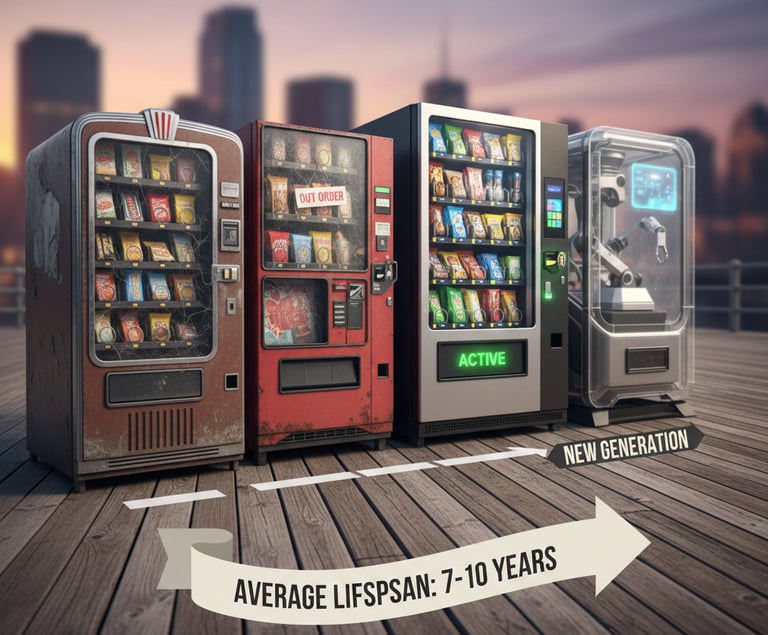
Vending is different — these machines are built like tanks. With the right brand and proper upkeep, a vending machine can last 8 to 20 years depending on the model, usage, and environment.
Here’s what the lifespan really looks like, from someone who has placed and serviced machines across the New York Tri-State Area.
The Real Answer: 8–20 Years Depending on the Machine Type
Not all machines last the same amount of time. Here’s what most operators see:
Top Brands (AMS, Dixie Narco, Crane, Royal, Vendo)
→ 10–20 years with normal upkeepGlass-front modern snack machines
→ 8–15 years depending on traffic and environmentCombo machines (snack + drink in one)
→ 7–12 years because they have more moving parts and smaller compressors
The range is wide because these machines aren’t “one and done.” They’re modular. Parts can be repaired or swapped out for a fraction of the cost of a replacement.
The Factors That Kill Machines Early
Through operating my route, I've identified what actually shortens vending machine lifespans—and it's not what people usually expect.
1. Poor Ventilation for Refrigerated Units
This is the big one. If you've got a refrigerated machine and it's not in a properly vented area, you're asking for trouble. The compressor works overtime, heat builds up, and you're looking at premature failure.
2. Neglecting Cleanliness
This one's simple but critical: keep the machine and the area around it clean. Dust and dirt build up around the machine's components, particularly near ventilation areas. This buildup forces the machine to work harder and causes unnecessary wear. A clean machine is a long-lasting machine.
3. Indoor vs. Outdoor Placement
There are machines built specifically for indoor use and others designed for outdoor environments. Even among the good brands, using an indoor machine outside (or vice versa) will cut its lifespan short. Match the machine to its environment.
Case Study: My Oldest Machine — The Dixie Narco 501E
The oldest machine I owned was a Dixie Narco 501E.
MDB compatible (Connected to a modern credit card reader)
Vend sensor installed
Absolutely reliable
A true workhorse
Mechanically, it surprised me. It ran as well as some of the newer units I had.
The only issue?
Aesthetics.
In 2025 and beyond, a 501E looks noticeably dated — especially in offices, residential buildings, and modern amenity spaces. Property managers today prefer clean glass-front machines, LED lighting, and tap-to-pay functionality.
In other words: the machine lasted, but the look didn’t.
What's Changing: AI Vending Machines
The industry is evolving, and AI vending machines are here to stay. They are aesthetically pleasing, easy to operate, and use artificial intelligence. They're going to last—no question about it. But there's one important caveat: the technology will need upgrading every 5-7 years.
Think of it like a smartphone. The physical machine might be fine, but the software and tech components will need refreshing to stay current. The good news? With proper maintenance, these newer machines can last even longer than traditional ones. You're just budgeting for tech upgrades instead of mechanical repairs.
Why Most Machines Don’t Need Replacing — They Need Maintenance
In my entire time running vending machines, I have never replaced a machine because it “died.”
The only issues I’ve run into were:
Compressor repairs: around $300
Coin mechanism repair: ~$40–50
Card reader connectivity: solved by switching providers
All small and affordable fixes. None required buying a new machine.
When you maintain them, these machines just keep going.
What Actually Extends the Lifespan?
(From an Operator Who Services Machines)
Property managers often assume that breakdowns are common. But with proper upkeep, they’re rare.
Here’s exactly what we do on every visit:
Keep the machine and surrounding area clean
Dust buildup around a refrigerated unit causes heat issues over time.Ventilation check
Especially for drink machines with compressors.Bill acceptor cleaning
Clean belts = fewer rejected bills.Remove coin jams
Quick fix that avoids bigger problems.Clean the glass and display
Improves appearance (tenants notice this more than you think).
Machines that get this kind of routine attention almost never fail — and they easily reach 10+ years.
Why Many Locations Upgrade Before a Machine “Dies”
Here’s where the real gap is:
A machine’s mechanical lifespan is long — but its aesthetic lifespan is shorter.
Most buildings upgrade when:
They want a glass-front machine instead of an older solid-face model
They want tap-to-pay and modern card readers
Capacity needs increase (small machine → larger machine)
The machine no longer fits the building’s brand or amenity standards
This is especially true in:Office buildings
Luxury residential communities
Newly renovated amenity spaces
Fitness centers and community rooms
A machine can run for 20 years, but you’ll rarely see a 20-year-old unit in a modern lobby — and that’s a good thing.
What Building Managers Value Today
In my conversations with property managers, resident managers, directors of facilities, and operations teams, the priorities are consistent:
Modern, clean look
Tap-to-pay (Apple Pay, Google Pay, contactless)
Efficient, reliable equipment
Prompt customer service
Guaranteed vend technology
A machine that feels like an amenity, not an eyesore
A modern machine with a card reader tells tenants, residents, and employees:
This building is cared for.
And that affects satisfaction way more than most people realize.
Why MotoSnax Vending Uses Well-Built Machines
MotoSnax Vending uses machines from the best brands:
AMS
Dixie Narco
Crane
Royal
Vendo
USI
Why?
Because these machines are:
Proven
Easy to service
Compatible with modern card readers
Capable of lasting a decade or more
When you start with a good backbone, the lifespan takes care of itself.
So… What's the Average Lifespan? (The Bottom Line)
A vending machine lasts anywhere from 8 to 20 years.
Mechanically? Often closer to 15–20+ years.
Aesthetically in a modern building? Usually 5–10 years before an upgrade makes sense.
With consistent maintenance? Easily over a decade with minimal repairs.
If you’re a property manager or facilities director, you’re unlikely to ever face a “dead” machine — only a machine that eventually needs a refresh to match the building’s standards.
When maintained right, vending machines outlast almost every amenity in the modern building.
Questions About Vending for Your Property?
Every property is different—from office buildings to apartment complexes to assisted living facilities. The right vending solution depends on your specific needs, tenant demographics, and available space.
MotoSnax Vending works with property managers and facilities directors to specify the right machines, ensure proper placement, and establish maintenance protocols by providing a complete vending machine service. The goal is simple: provide a reliable amenity that lasts 10+ years with minimal involvement from your team. Contact Us Today For Your Free Vending Machine!
MotoSnax Vending
Luxury Amenities & Modern Vending
© 2025. All rights reserved.
HOURS
Monday - FRIDAY 9AM to 5pm
saturday - 9am to 3pm
SUNDAY - CLOSED
emergency - 24 hours